Le licenciement du superviseur maintenu pour avoir exposé les travailleurs à l’amiante
Un arbitre a rejeté l’appel d’un superviseur d’Ontario Power Generation après qu’il ait été licencié pour des risques liés à la sécurité des travailleurs exposés à l’amiante. « Il était prêt à mettre en péril la santé et sécurité des employés pour lesquels il était responsable, comme pour ceux qui travaillaient au cycle de travail suivant, » a noté l’arbitre dans sa décision.
En octobre 2009, le superviseur et son équipe enlevaient les joints des portes d’un générateur nucléaire pendant une opération d’entretien. Les joints scellent les portes de pour maintenir l’hydrogène dans le générateur.
Supervisor’s Dismissal Upheld for Exposing Workers to Asbestos
An arbitrator has rejected an Ontario Power Generation supervisor’s appeal after he was dismissed for safety violations that exposed workers to asbestos. “He was willing to put at risk the health and safety interests of the employees for whom he was responsible, as for those coming on shift after him,” the arbitrator noted in his decision.
In October 2009, the supervisor and his crew were removing gaskets from the end doors of a nuclear generator undergoing a maintenance overhaul. The gaskets seal the end doors to keep hydrogen within the generator.
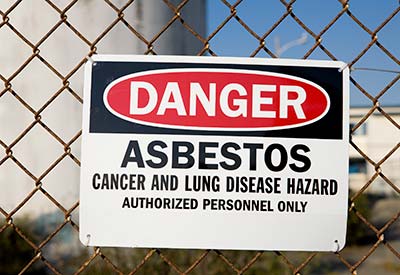
Although aware that gaskets are often made of asbestos, the supervisor did not check OPG documentation for the composition of the gaskets his crew would be removing. Airborne asbestos is extremely dangerous. Inhaled, it can cause mesothelioma, a cancer of the lining of the lung, and other fatal illnesses.
At a pre-job briefing, the supervisor informed his crew that the gaskets they had to remove might contain asbestos, and that he would conduct a visual inspection. “This was not an astute plan,” noted the arbitrator. Instead, he should have determined the gaskets’ composition by referring to information on OPG’s computer system.
After his visual inspection, the supervisor wrongly concluded the gaskets contained no asbestos. When the workers had trouble removing them, he told two of them to use grinders, and to wear personal protective equipment. However, the equipment was not designed to prevent exposure to asbestos released by grinding the gaskets.
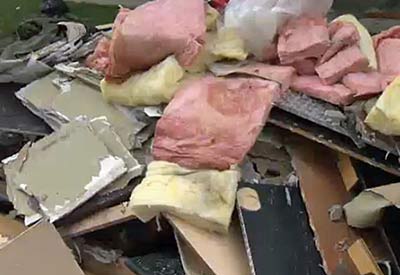
Grinding went on for six hours until another worker passing by complained about the amount of dust being generated and the possible risk of asbestos exposure. Work eventually stopped, but the supervisor told workers to clean up and dispose of the dust using conventional methods, which further exposed the workers to asbestos. He also failed to mention the complaint in his end-of-shift report, which exposed the next shift of workers to possible risk.
After tests found asbestos in the grinding debris, the supervisor was suspended and eventually dismissed. The supervisor appealed, bit the arbitrator upheld the dismissal.
“While I can see the grievor faced difficulty determining the true composition of the gasket in the early stages and that his blameworthiness then could be tempered with the institutional failures of the company and the other mitigating circumstances, that changed later,” the arbitrator concluded. “The manner in which the grievor responded towards the end of the day, and the next day, to the worker’s safety complaint and to the risk of asbestos contamination showed him to act in a manner best served to avoid difficulty for himself.”
More about asbestos
Asbestos poses health risks when fibres are inhaled, which can lead to asbestosis, mesothelioma, and cancer of the lung, gastrointestinal tract, kidney and larynx. However, it can take years for asbestos-related diseases to develop. Workers diagnosed today would have been exposed decades earlier.
Before the health hazards of asbestos were recognized, it was considered an ideal construction material. Materials made from asbestos are fire retardant and have high electrical resistance. Tradespeople may be exposed to asbestos today during renovations and repairs. Every province and territory has workplace health and safety requirements in place to protect workers.
For more on the incident, read the arbitrator’s decision: http://www.canlii.org/en/on/onla/doc/2014/2014canlii46738/2014canlii46738.pdf